
Make it Small!
“Learn to Model and Mock Up”

Last week during my live Substack event, I mocked up another shelf design with some cardboard and a hot glue gun.
I don’t expect someone at the beginner level to think of doing it or being great at it. I will tell you that it’s a very valuable tool to help visualize ideas and concepts without spending a lot of time nor resources. I’ve seen a lot of professionals do it so I decided to share it with you.
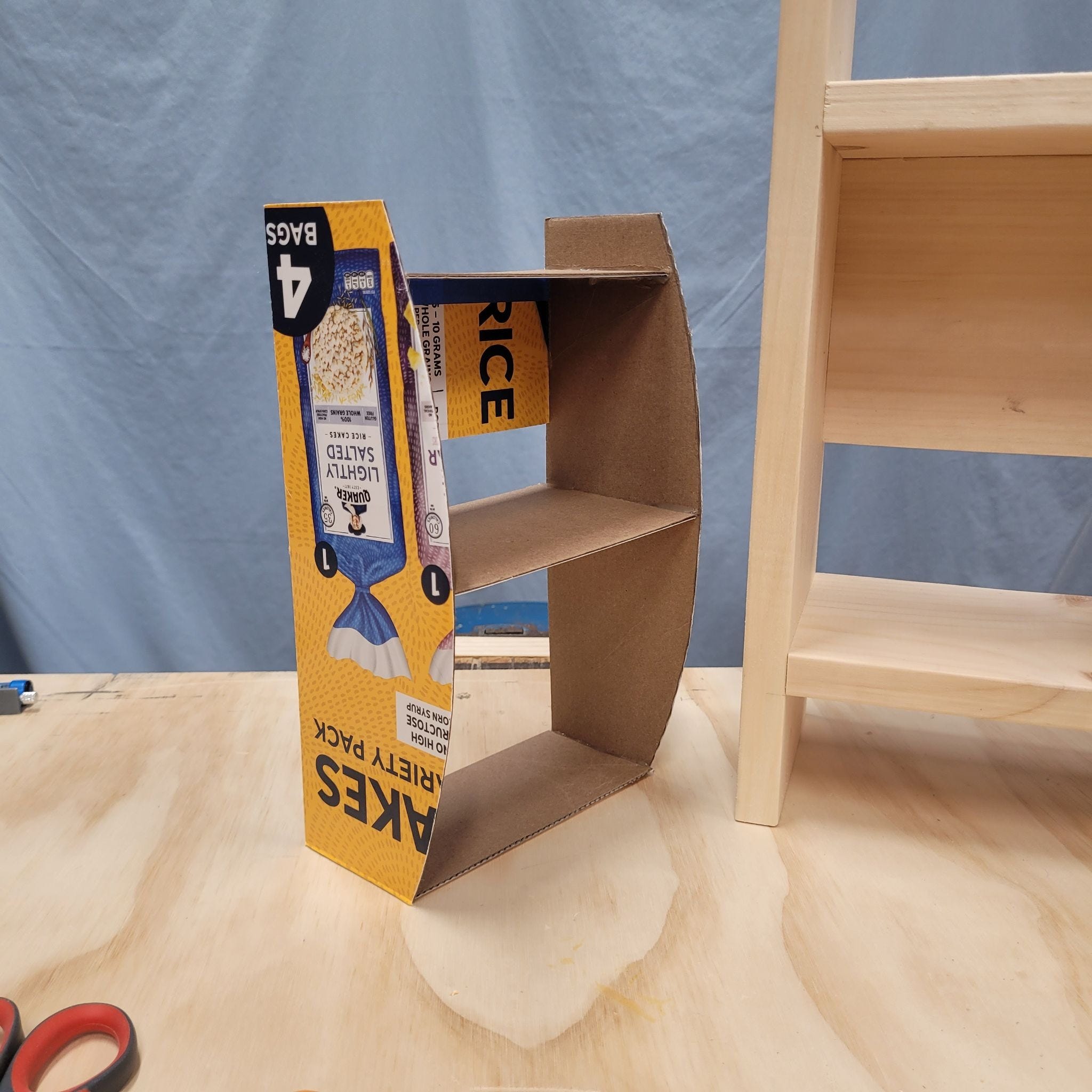
Tools I use:
Exacto knife or box cutter
Metal framing square
Combination squares
Pencil
Hot glue gun
Painters tape
Cardboard raided from the recyclable bin or even the pantry
I try to make the objects ½ scale but it’s not always perfect, but it doesn’t need to be.
What doesn’t it do?
It doesn’t illustrate the joinery that’s necessary to build it sometimes.
The thin cardboard doesn’t reflect how thick a piece of wood is.
What does it do?
Allows us to see proportions.
Allows us to test dimensions.
Allows us to think about the building process.
Coupled with sketches, mock ups can be an incredibly useful tool. And it doesn’t have to be just cardboard. Pieces of wires… pipe cleaners… foam… whatever you have on hand.
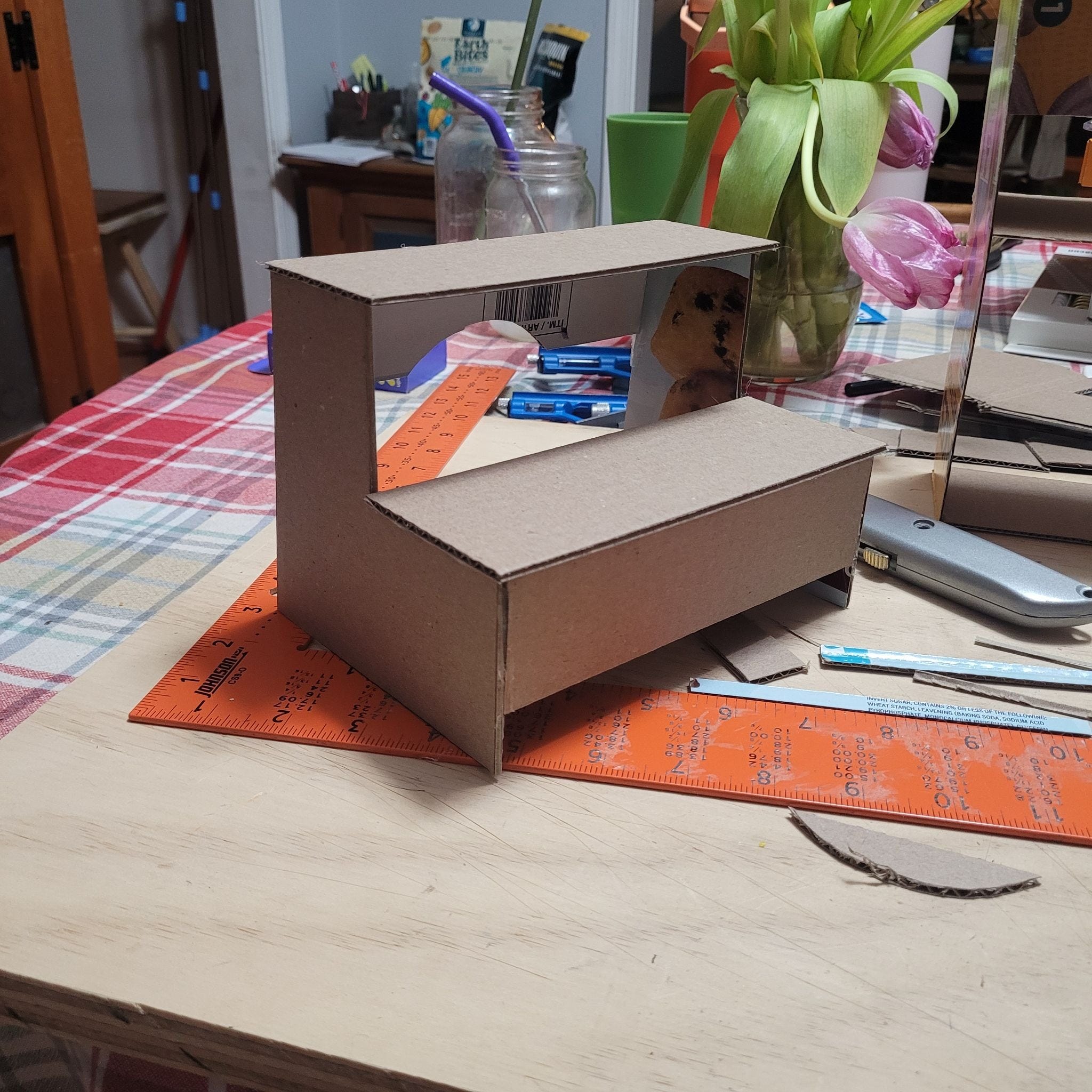
And it can be done at the kitchen table.
Feel free to write notes on it, describing the joinery that’ll be used, exact measurements, or any comments that’ll help in its creation.
Let me know in the comments if you do mock ups or not.
I’ll go more in depth in a future workbook but wanted to share the concept of it here.
I did a mock-up for the first time for my most recent project. I was making a toilet stool and the primary concern I had was the curve in the stool fitting the curve of the toilet exterior. I mocked it up 1:1 in cardboard. I held the whole thing together with some "Makedo" cardboard screws that I had purchased for my kids. It started as part of playing with my kids then after putting them down for nap I finished.
Using the 1:1 mock-up I was able to scribe the curve off the toilet onto the cardboard and test the fit of the stool tucked under the toilet when not in use. I could also see exactly how much real estate it took up in the bathroom. It's a useful technique and I'll probably use it again more in the way you are talking about here, 1:2 scale model for rapid prototyping is an idea. The nice thing about the Makedo screws is it allows you to easily take one part of the project off, leaving the rest unchanged. I could also easily take the model apart to use as a template for the curve on the real deal.
Last night I wasted 1.5 hrs of precious shop time drawing and redrawing a profile for a hanging box directly on the wood. After reading this, I now believe I would have been better served to quickly whip out multiple iterations of the design on cardboard, cut them out (or not) and then decided which one to use. I think I would’ve done it in 15 minutes. And then I would’ve had a traceable profile that I could reuse if I liked it.
Thank you for the inspiration